

Article: Where does depression really begin?

Where does depression really begin?
The latest research shows that for some people the answer lies in the immune system, not in their thoughts
For a long time, depression was explained mainly by psychological factors — thoughts, emotions, trauma, stress. But modern psychiatry is increasingly asking a different question: what is happening in the body as a whole?
Recent clinical research shows that in some people depression is closely linked to chronic inflammation in the body, rather than to weakness of character or a "wrong way of seeing the world".
Depression linked to immune-system inflammation – up to 30% of cases
The INSTA-MD study, published in 2024 (Brain, Behavior, and Immunity – Health), describes a subtype of depression linked to immune-system inflammation.
Around 30% of people with severe depression have:
- elevated levels of inflammation in the blood (hsCRP ≥ 3 mg/l; hsCRP is high-sensitivity C-reactive protein)
- marked fatigue
- an inability to feel pleasure
- increased appetite
- increased sleepiness
Important: in these people, standard antidepressants often work less well or not at all.
When motivation disappears not in the mind, but in biochemistry
The interaction between the brain and the immune system is not abstract. Inflammation directly affects the dopamine system — the system responsible for motivation, interest and the drive to do things. When inflammation is high, it isn't that a person doesn't want to; they are physiologically unable to feel a sense of reward.
From this perspective, depression is a protective response — the brain reduces activity to conserve energy while the body is in an inflammatory state. The problem arises when the inflammation becomes chronic and the body no longer leaves this mode.
A more precise approach: treating the cause, not just the symptom
The idea behind the INSTA-MD study is simple yet revolutionary: before choosing a therapy, find out whether there is inflammation in the body.
In the study, patients are grouped by their hsCRP inflammation level, and only then is an additional therapy chosen. The expected effect: in patients whose depression is rooted in inflammation, anti-inflammatory therapy may help them feel better in 15–30% of cases.
The question is no longer "what's wrong with me?" but "which system in my body is overloaded right now?" And that's where the conversation turns to chronic stress, lack of sleep, the gut–brain axis, an overloaded nervous system and inflammation as a background state.
Functional mushrooms as support, not a solution
In the Shroomium philosophy, we never talk about "miracle cures". But we do talk about supporting systems that are overloaded.
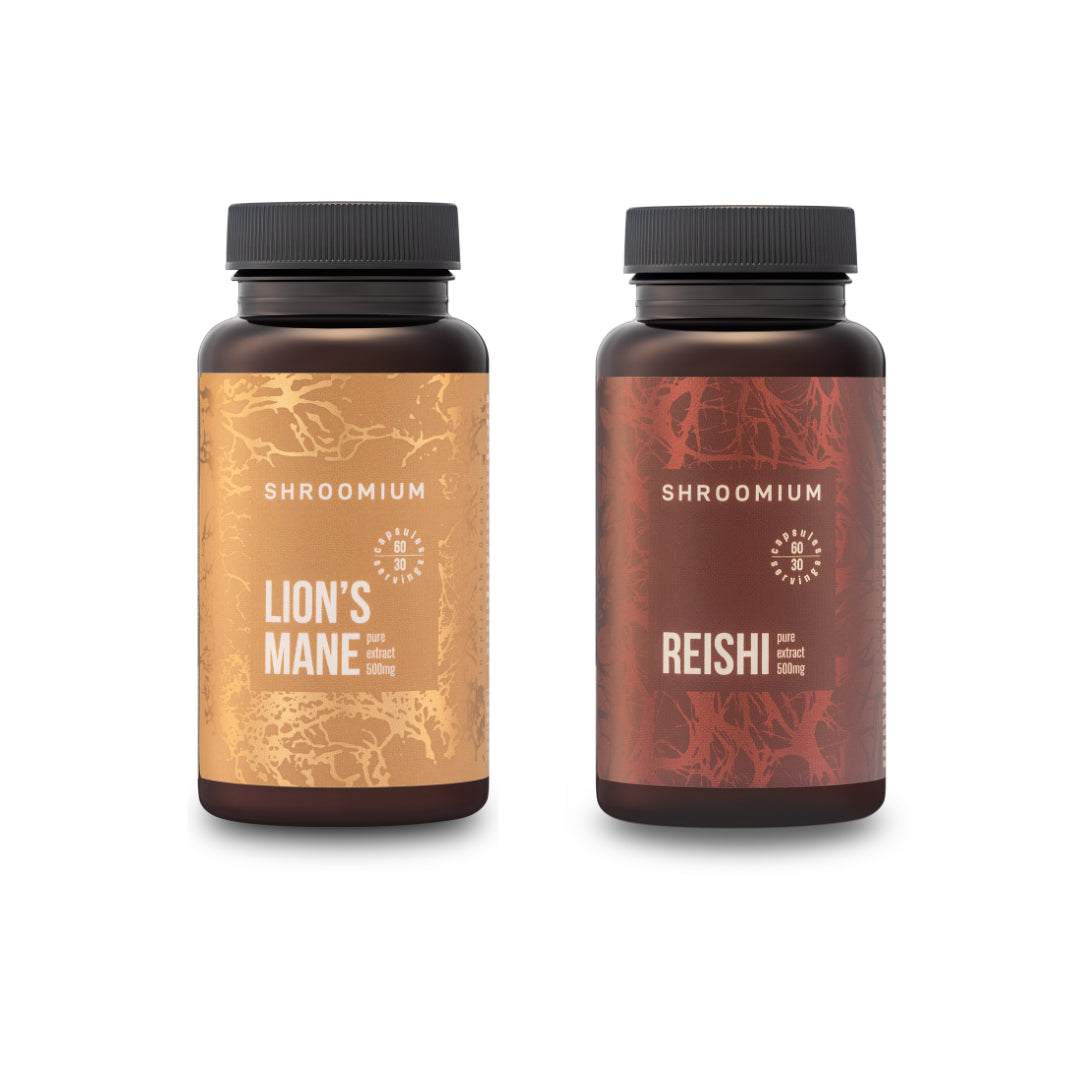
Reishi has traditionally been used as a mushroom that helps reduce inflammatory processes, supports immune balance and encourages a calmer nervous system response. When the body is no longer in a constant "alarm mode", it becomes easier for the brain to return to balance.
Lion's Mane is associated with nervous system support, neuroplasticity and improvements in mood and mental clarity. In practical terms, it helps the brain feel interest, focus and lightness again.
In conclusion
Depression is not a single illness. It is a combination of various biological, nervous-system and lifestyle factors. And sometimes the first step isn't to "fix your thoughts", but to support your body so that your brain can feel better at all.
References:
